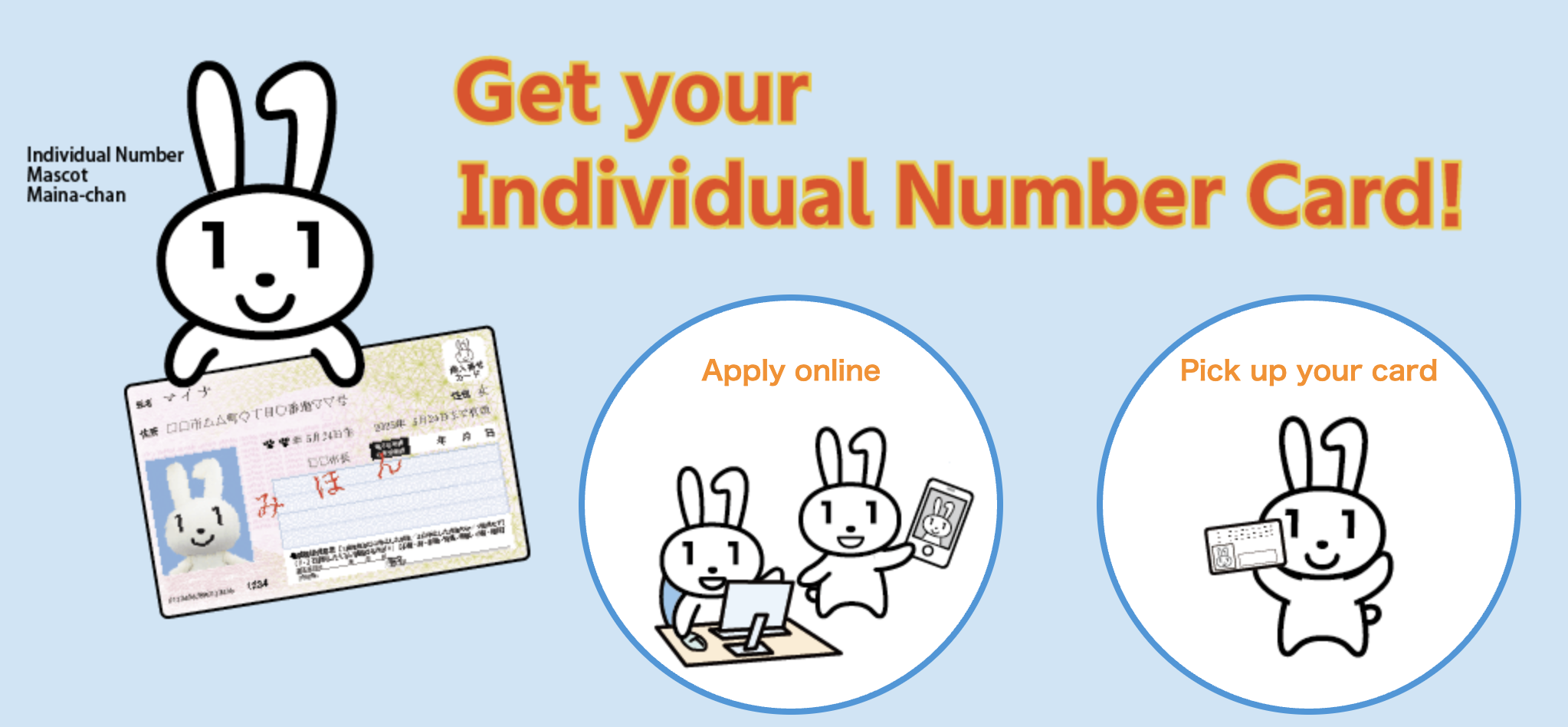
The My Number card is Japan’s national ID card, and it is increasingly essential for everything from hospital visits to online government services. Here is how to apply, what to expect, and what to do when you go to collect it.
Every person registered in Japan, whether Japanese citizen or foreign resident, is automatically assigned a My Number (個人番号, kojin bangou), a 12-digit identification number. The My Number card (マイナンバーカード, My Nanbaa Kaado) is the optional physical card that makes this number useful in daily life.
The card is not legally required, but without it you cannot use online government services, use it as a health insurance card at medical facilities, or print official documents at convenience stores. Most foreign residents find it essential in practice. Applying is free. Japanese terms used in this guide are listed in the keyword guide at the bottom.
2026 update: a new combined card is available
Before you can apply: the notification letter
You cannot apply for the My Number card until you have registered your address at the ward office (区役所, ku-yakusho). After registration, a notification letter (個人番号通知書, kojin bangou tsuuchi-sho) is sent by registered post to your registered address. This letter contains your My Number and an application form with a QR code. It typically arrives within two weeks of registering.
If you have not yet registered your address, do that first. See the guide How to Register your Address at City Hall for the full process.
Lost your notification letter?
Three ways to apply for your My Number card
Online application (recommended)
The online method is the fastest and easiest. Open your smartphone camera and scan the QR code on your notification letter. This takes you directly to the J-LIS application page and then to the online portal. You will upload a photo of your face during the process. No printed photo needed. The portal is available in English and multiple other languages.
You will need to enter: your 23-digit Application ID (printed on the form), a daytime phone number, and your photo. The whole process takes around 10 minutes.
Photo tips
By post
Fill in the paper application form included with your notification letter. Attach a passport photo (4cm x 3cm, plain background, taken within six months). Post it back in the provided envelope, the pre-addressed envelope is included and no additional stamp is needed.
Foreign residents: check field ④ carefully
Photo booth
Select photo booths at convenience stores and train stations support My Number card applications. Look for the “個人番号カード申請” option on the touchscreen. The machine takes your photo and submits the form. Not all booths are compatible, check the J-LIS list of compatible machines (Japanese only) before visiting.
Just moved to Japan from overseas? You may qualify for express issuance
People who have recently moved to Japan from overseas, including foreign residents, are eligible for the express issuance system (特急発行・交付制度, tokkyuu hakkou koufu seido). Instead of waiting approximately one month, the card is delivered directly to your registered home address by registered mail within approximately one week.
To use this option, apply in person at your ward office. It cannot be done online or by post. You must apply within 30 days of moving from overseas. See the J-LIS express issuance guide (English) for full eligibility details.
After you apply: what happens next
For standard applications, the card takes approximately one month to produce after J-LIS receives your application, though the notice can sometimes arrive a little earlier. Your ward office then carries out additional processing before sending you a collection notice (交付通知書, koufu tsuuchi-sho) by post.
The collection notice is a postcard telling you your card is ready and where to collect it. Wait for this notice before going to the ward office. the card will not be ready to collect before it arrives.
You can check the status of your application using your 23-digit Application ID and date of birth at the J-LIS application status checker (Japanese only. No English version available at time of writing).
If you move before collecting your card
Collecting your My Number card in person
Bring the collection notice to the ward office listed on it, by the deadline printed on the notice. You must collect the card yourself, a representative can only collect on your behalf in cases of serious illness or disability.
Book your collection appointment first
At the collection counter, you will set two PIN codes for the card’s electronic certificate functions:
- Signature certificate PIN: 6 to 16 characters. Must include at least one uppercase letter (A–Z) and at least one number (0–9). Used for e-Tax, official online applications, and MynaPortal.
- User authentication PIN: 4-digit number. Used for convenience store document printing and identity verification. You can set this to the same number as the numeric part of your signature PIN if you prefer.
Choose PINs you can remember. Entering the wrong PIN three times locks the card. To unlock it, visit your ward office.
Card validity for foreign residents on limited visas
Good to know
What you can do with the My Number card
Once you have your card, it unlocks a range of services:
- National photo ID. The card is accepted as official identification at banks, post offices, and government offices. It is equivalent to a driving license or passport for in-person identity verification.
- Health insurance card. At participating clinics, hospitals, and pharmacies, you can present the card instead of your paper insurance card (保険証, hoken-shou). This is now the standard at most medical facilities.
- Online government services. Renew your residence status, file taxes via e-Tax, and access services through MynaPortal (the government’s digital services hub for residents).
- Convenience store document printing. Use the card to print your resident registration record (住民票, jumin-hyou) and other official documents at kiosk machines in most convenience stores. No ward office visit required.
- Banking and private online services. Many banks and financial services use the card’s electronic certificate for secure identity verification when opening accounts or applying online.
What to bring when collecting your card
- Collection notice, the postcard sent by your ward office
- Residence card, your primary photo ID
- Notification card or notification letter (if you still have it)
- Your two chosen PINs written down somewhere safe as you will need to enter them at the counter
Common questions
Is the My Number card mandatory for foreign residents?
Having a My Number (the number itself) is mandatory for all registered residents. The physical My Number card is not legally required but without it, you cannot use online government services, cannot use the card as a health insurance card at medical facilities, and cannot print documents at convenience stores. As more services move online and the card becomes the default health insurance credential, not having one creates practical friction. Applying is free and strongly recommended.
How long does the full process take?
For standard applications: allow approximately 6 to 8 weeks from when you register your address. Your My Number notification letter arrives within two weeks of registration. After you apply, the card takes approximately one month to produce, plus additional time for your ward office to process and mail the collection notice. If you qualify for express issuance (recently moved from overseas), the card arrives at your home within approximately one week of applying in person at the ward office.
Can someone else collect my card on my behalf?
Only in cases of serious illness, disability, or other unavoidable circumstances. A representative must bring a proxy authorization form (委任状, inin-jou), their own photo ID, and your photo ID documents. This is intentionally difficult as the card is designed to be collected in person because the PIN must be set by the cardholder at the counter.
What happens if I enter the wrong PIN and lock the card?
Visit your ward office to unlock it. The 4-digit user authentication PIN can now also be reset at convenience store kiosk machines (see the Public Certification Service portal for supported locations). The 6–16 character signature PIN must be reset at the ward office.
What if I move before I receive my card?
If you move before receiving your collection notice, your application is cancelled. When you register your new address at the new ward office, request a fresh application form and reapply. If you have already received your collection notice and then move, contact your new ward office as you may still be able to collect the card there.
What if I move after receiving my card?
If you move after you already have your My Number card, you do not need to reapply. However, you must visit your new ward office to have your new address recorded on the card. Bring your My Number card, residence card, and any documents required for your address change registration. Your card cannot be used for online services that require address verification until it is updated.
Japanese terms in this guide
| Japanese | Reading | Meaning |
|---|---|---|
| 個人番号 | kojin bangou | My Number, 12-digit individual ID assigned to all Japan residents |
| マイナンバーカード | My Nanbaa Kaado | My Number card, national ID card containing your Individual Number |
| 特定在留カード | tokutei zairyu kaado | Specified Residence Card, optional combined card (from June 2026) merging residence card and My Number card |
| 在留カード | zairyu kaado | Residence card, primary ID for long-term foreign residents |
| 区役所 | ku-yakusho | Ward office, local government office where you register your address and collect your card |
| 個人番号通知書 | kojin bangou tsuuchi-sho | My Number notification letter, arrives after address registration; contains your application form and QR code |
| 交付通知書 | koufu tsuuchi-sho | Collection notice, postcard from ward office telling you your card is ready to collect |
| 特急発行・交付制度 | tokkyuu hakkou koufu seido | Express issuance system, ~1 week delivery to home; available to recent overseas arrivals |
| 保険証 | hoken-shou | Insurance card, health insurance credential; the My Number card can be used in its place |
| 住民票 | jumin-hyou | Resident registration record, can be printed at convenience stores using your My Number card |
| 委任状 | inin-jou | Proxy authorization form, required if a representative collects the card on your behalf |
Sources
- J-LIS My Number Card — English homepage — Overview, application process, and links to English-language guides
- J-LIS — Application methods overview (Japanese — verified May 2026) — Three application routes; standard ~1 month processing time
- J-LIS — Online application guide (Japanese — verified May 2026) — QR code process; photo upload requirements
- J-LIS — Mail application guide (Japanese — verified May 2026) — Paper form, photo attachment, foreign resident field ④ requirement
- J-LIS — Photo booth application guide (Japanese — verified May 2026) — Compatible machine manufacturers
- J-LIS — Express issuance guide (Japanese — verified May 2026) — Eligibility, ~1 week delivery, in-person ward office application required
- J-LIS — Collection guide (Japanese — verified May 2026) — Documents required; PIN setting; proxy collection rules
- J-LIS — What you can do with the card (Japanese — verified May 2026) — National ID, health insurance, online services, convenience store printing
- J-LIS — Application status checker — Check progress using your 23-digit Application ID


Leave a Reply